
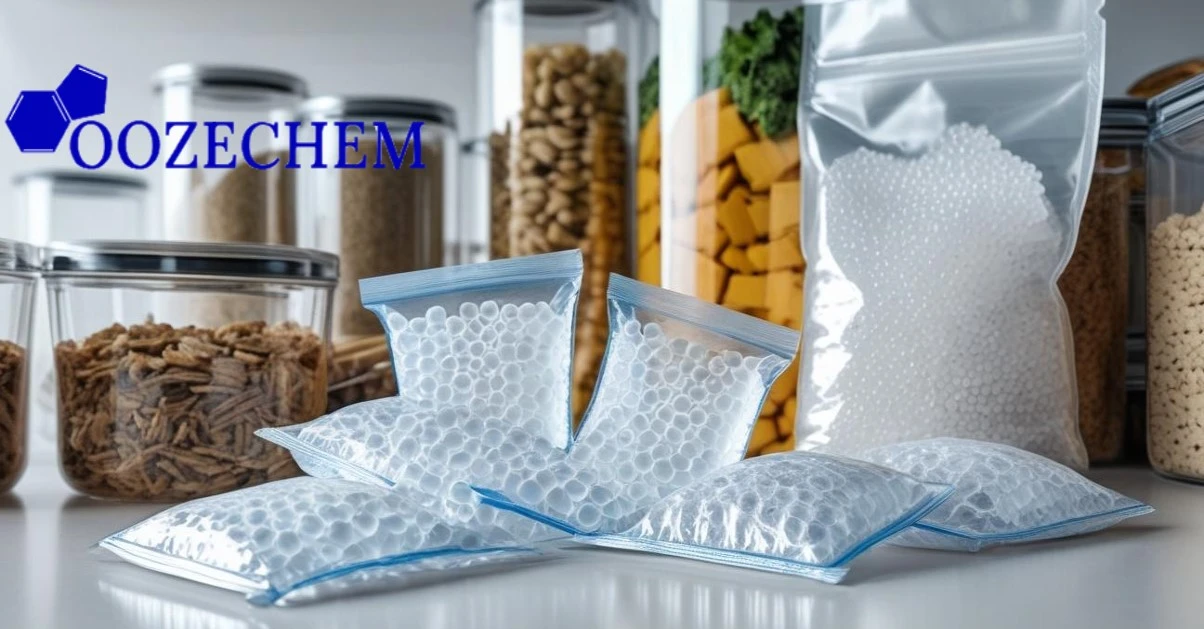
Moisture control plays a critical role in preserving food quality, extending shelf life, and maintaining product freshness throughout the supply chain. Food-grade silica gel is widely used as a desiccant solution to protect packaged foods from humidity-related damage while supporting food safety and quality standards.
At OozeChem.com, we provide food-grade silica gel solutions specifically designed for packaging applications, ensuring optimal moisture control while maintaining the highest safety standards for food contact materials.
Understanding Silica Gel Properties and Food Safety
Silica gel is a highly porous, synthetic form of silicon dioxide that exhibits exceptional moisture adsorption capabilities. The unique structure of silica gel creates millions of tiny pores that trap water molecules, making it ideal for various uses for silica gel packages in food preservation applications.
| Property | Food Grade Silica Gel | Industrial Grade | Indicating Silica Gel |
|---|---|---|---|
| Purity Level | >99.5% SiO₂ | >98% SiO₂ | >98% SiO₂ + indicator |
| Moisture Capacity | 35-40% by weight | 30-35% by weight | 30-35% by weight |
| FDA Approval | Yes (21 CFR 182.90) | No | No |
| Particle Size | 1-5mm typical | 0.5-8mm variable | 1-5mm typical |
| Color Indication | None (colorless) | None | Blue to pink change |
| Food Contact Safe | Yes | No | No (toxic indicator) |
| Regeneration Temp | 120-150°C | 100-200°C | 100-150°C |
Food-grade silica gel must meet strict purity standards and regulatory requirements to ensure safety when used in direct or indirect food contact applications. The FDA-approved status of food-grade silica gel makes it suitable for silica gel for packaging applications where accidental ingestion might occur.
Why Silica Gel is Preferred for Food Packaging
- High moisture adsorption capacity
- Food-safe and non-toxic grades available
- Cost-effective moisture protection
- Long shelf life
- Suitable for various packaging formats
- Easy integration into existing packaging systems
Common Food Products Protected by Silica Gel
The diverse uses for silica gel packages span across multiple food categories, each requiring specific moisture control strategies to maintain product integrity and consumer safety. Understanding these applications helps manufacturers select appropriate silica gel solutions for their specific packaging needs.
Dry Food Products
Silica gel for food packaging plays a crucial role in protecting dry foods including cereals, crackers, nuts, dried fruits, and snack foods. These products are particularly susceptible to moisture adsorption that can lead to staleness, texture changes, and microbial growth.
Common Dry Food Applications:
- Breakfast Cereals – Maintaining crispness and preventing sogginess
- Crackers and Cookies – Preserving texture and preventing staleness
- Nuts and Seeds – Preventing rancidity and maintaining freshness
- Dried Fruits – Avoiding clumping and sugar crystallization
- Pet Food – Maintaining nutritional value and preventing mold

Pharmaceutical and Nutraceutical Products
The pharmaceutical industry extensively utilizes silica gel for packaging moisture-sensitive medications, vitamins, and dietary supplements. These applications require the highest purity grades to ensure product efficacy and consumer safety.
| Product Category | Package Size | Silica Gel Amount | Moisture Target |
|---|---|---|---|
| Vitamin Bottles | 100-500 tablets | 1-2g packets | <5% RH |
| Medicine Bottles | 30-100 capsules | 0.5-1g packets | <10% RH |
| Supplement Jars | 60-180 tablets | 1-3g packets | <8% RH |
| Powder Medications | 50-250g containers | 2-5g packets | <5% RH |
| Herbal Products | Variable sizes | 1-4g packets | <10% RH |
Specialty Food Categories
Certain food categories require specialized silica gel for food packaging solutions due to unique moisture sensitivity characteristics. These applications often demand custom packaging designs and specific silica gel configurations.
Specialty Applications:
- Powdered Products – Preventing caking in spices, protein powders, and baking mixes
- Confectionery Items – Maintaining texture in chocolates, candies, and gummies
- Dried Meats – Preserving jerky and dried meat products
- Tea and Coffee – Protecting flavor compounds and preventing staleness
- Seasoning Packets – Maintaining free-flowing properties in salt and spice blends
Types of Silica Gel Packaging Systems
Various packaging configurations enable effective silica gel for packaging applications across different food products and storage conditions. Understanding these options helps manufacturers select the most appropriate moisture control solution for their specific requirements.
Packet Systems
Pre-sealed silica gel packets represent the most common silica gel for packaging application, offering convenient, portion-controlled moisture adsorption for individual food packages. These packets come in various sizes and materials to suit different product requirements.
Packet Specifications:
- Tyvek Packets – Breathable, tear-resistant material for general applications
- Non-Woven Fabric – Cost-effective option for basic moisture control
- Paper Packets – Biodegradable option for environmentally conscious brands
- Plastic Film – Superior moisture barrier for extended protection
Canister Systems
Larger food packaging applications utilize canister-style silica gel systems that provide high-capacity moisture control for bulk products or long-term storage applications. These systems offer refillable options and enhanced moisture adsorption capabilities.

Integrated Packaging Solutions
Advanced packaging designs incorporate silica gel directly into packaging materials or closure systems, providing seamless moisture control without visible desiccant packets. These solutions offer aesthetic advantages while maintaining effective moisture protection.
International Standards and Certifications
Global food packaging applications require compliance with various international standards including EU regulations, Japanese food contact materials standards, and other regional requirements.
| Region | Regulation | Key Requirements | Testing Standards |
|---|---|---|---|
| United States | 21 CFR 182.90 | Purity, migration limits | FDA methods |
| European Union | EU 10/2011 | Overall migration, specific limits | EN standards |
| Japan | Food Sanitation Law | Purity, contaminant limits | Japanese standards |
| Canada | FDR Division 23 | Food contact compliance | Health Canada methods |
| Australia | FSANZ Code | Food contact safety | Australian standards |
Environmental Conditions
Storage and distribution environments significantly impact silica gel performance and selection requirements. Understanding these conditions helps optimize desiccant specifications for maximum effectiveness.
Environmental Considerations:
- Relative Humidity – Ambient moisture levels during storage
- Temperature Fluctuations – Thermal cycling effects on moisture migration
- Seasonal Variations – Climate changes affecting packaging performance
- Transportation Conditions – Shipping environment impacts
- Storage Facilities – Warehouse conditions and climate control
Quality Control and Testing Procedures
Maintaining consistent performance in silica gel for packaging applications requires comprehensive quality control procedures covering moisture adsorption capacity, purity verification, and safety testing. These procedures ensure reliable protection and regulatory compliance.
Performance Testing Methods
Standard testing methods verify silica gel performance characteristics including moisture adsorption capacity, adsorption kinetics, and regeneration properties. Regular testing ensures consistent product quality and effectiveness.
| Test Parameter | Method | Acceptance Criteria | Testing Frequency |
|---|---|---|---|
| Moisture Capacity | ASTM D2187 | >35% at 90% RH | Every batch |
| Purity Analysis | ICP-MS | >99.5% SiO₂ | Monthly |
| Particle Size | Sieve analysis | Per specification | Weekly |
| Heavy Metals | ICP-MS | FDA limits | Quarterly |
| Microbial Testing | USP methods | <100 CFU/g | Monthly |
| Package Integrity | Visual/mechanical | No defects | Continuous |
Frequently Asked Questions
Is silica gel safe for food packaging?
Food-grade silica gel is considered safe when manufactured according to FDA and food-contact regulations.
Can silica gel packets touch food directly?
Food-grade silica gel is commonly used inside food packaging, but packets should not be opened or consumed.
What foods commonly use silica gel packets?
Snack foods, spices, dried fruits, supplements, vitamins, tea, coffee, and powdered products often use silica gel for moisture control.
How long does silica gel last in food packaging?
Performance depends on humidity levels, packaging quality, and storage conditions, but silica gel can remain effective for extended periods.
Conclusion
Food-grade silica gel remains one of the most effective moisture control solutions for protecting packaged foods, supplements, and other moisture-sensitive products during storage and transportation.
At OozeChem.com, we provide comprehensive silica gel for food packaging solutions backed by technical expertise and regulatory knowledge. Our commitment to quality and safety ensures that you receive the most appropriate moisture control solutions for your specific packaging applications, supported by reliable supply chains and professional guidance that enables successful project outcomes and long-term customer satisfaction.
Our Range of Silica Gel Desiccants
Looking for other moisture control and adsorption solutions? Explore our complete range of Silica Gel Desiccants includes: