
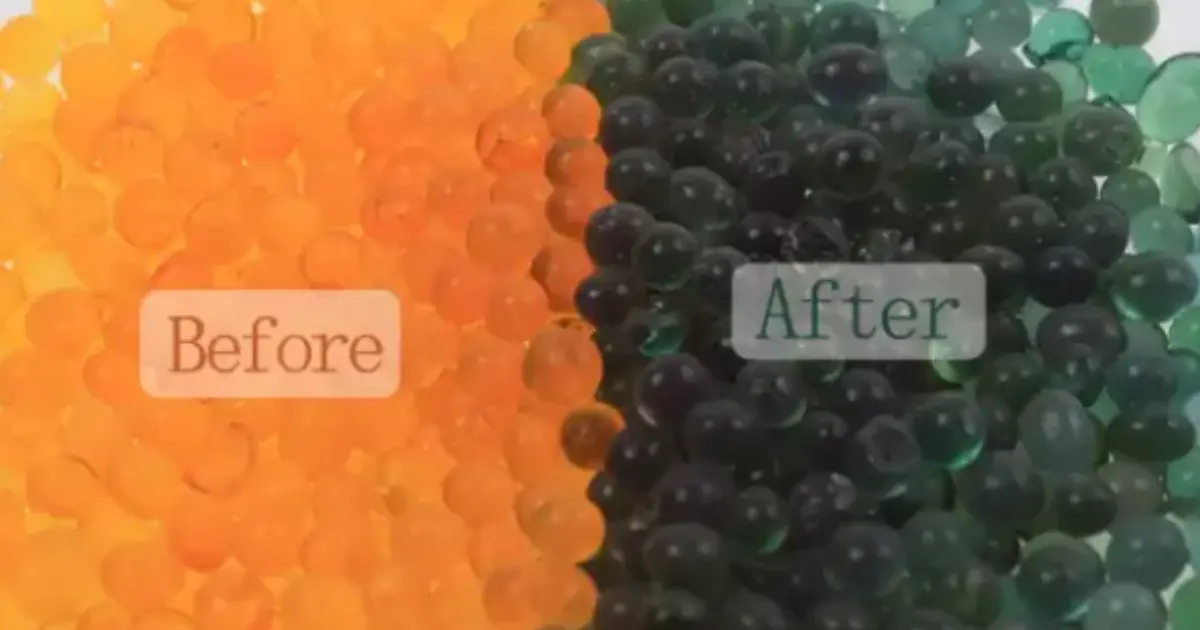
Why does silica gel change color? Color-changing silica gel is designed to indicate moisture absorption, helping users identify when a desiccant is becoming saturated. Depending on the indicator type, orange silica gel may turn green while blue silica gel can turn pink, providing a visual signal for moisture exposure and desiccant condition.
This guide explains how color-changing silica gel works, why its color changes, and the difference between blue and orange silica gel indicators. It also covers how silica gel helps protect electronics, pharmaceuticals, food packaging, leather goods, machinery, and industrial products from humidity damage in UAE storage and transportation
What Is Indicating Silica Gel?
Indicating silica gel is a specialized type of silica gel desiccant that changes color as it absorbs moisture from the surrounding environment. Unlike standard white silica gel, these beads contain a moisture sensitive indicator that provides a visual signal when the desiccant approaches saturation.
This simple color indication helps maintenance teams avoid guesswork and replace or regenerate the desiccant at the right time, improving efficiency and protecting moisture sensitive products.
Common types include:
- Orange silica gel
- Blue silica gel
- White (non-indicating) silica gel
These silica gel beads are widely used in industrial packaging, compressed air systems, storage containers, laboratories, pharmaceutical manufacturing, and export packaging throughout the UAE and GCC.
Why Does Silica Gel Change Color?
The primary purpose of color changing silica gel is to indicate the amount of moisture it has absorbed.
Silica gel itself is made from porous silicon dioxide with an extremely large internal surface area. As water vapor enters the pores, it becomes trapped through an adsorption process rather than absorption. The moisture indicator mixed with the silica gel reacts to humidity levels, causing the visible color change. Once the beads become saturated, they signal that regeneration or replacement is necessary.
Orange Silica Gel: Why Does It Turn Green?
One of the most popular humidity indicator silica gel products used today is orange indicating silica gel.
Fresh beads appear bright orange. As moisture adsorption increases, the beads gradually change to green, providing a clear indication that they have reached their moisture-holding capacity.
Benefits of Orange Indicating Silica Gel
- Easy visual monitoring
- Cobalt free silica gel formulation
- Environmentally safer than traditional blue indicators
- Suitable for industrial and commercial applications
- Reusable after proper regeneration
Because it does not contain cobalt chloride, orange silica gel has become the preferred choice for companies seeking safer and environmentally responsible moisture control solutions.
Common Applications
- Electronic equipment
- Industrial machinery
- Medical devices
- Shipping containers
- Export packaging
- Automotive components
- Laboratory equipment
- Moisture sensitive chemicals
Blue Silica Gel: Why Does It Turn Pink?
Another widely recognized silica gel moisture indicator is blue silica gel.
Fresh blue silica gel appears dark blue when dry. As moisture accumulates, the indicator gradually changes from blue to pink, signaling that the desiccant requires regeneration. For decades, blue indicating silica gel was the industry standard because the color change is easy to recognize.
However, many industries have shifted toward orange alternatives because traditional blue indicators contain cobalt chloride, a chemical that is subject to stricter environmental and safety regulations in many countries. Today, orange indicating silica gel is generally preferred for new industrial applications, especially where regulatory compliance and workplace safety are priorities.
How Does Silica Gel Desiccant Remove Moisture?
Unlike sponges that absorb water into their structure, silica gel desiccant beads remove moisture through adsorption.
The highly porous surface contains millions of microscopic pores that attract and hold water vapor molecules. This process allows silica gel for moisture control to maintain low humidity levels inside sealed packaging and storage environments.
Because of its exceptional adsorption capacity, silica gel desiccant is widely used for:
- Moisture protection during shipping
- Long term equipment storage
- Pharmaceutical packaging
- Food packaging
- Electrical cabinets
- Precision instruments
- Industrial warehouses
Even in the UAE’s hot and humid climate, moisture absorbing silica gel provides reliable humidity control for valuable products.
Can Silica Gel Be Reused?
Yes. One of the biggest advantages of reusable silica gel is its ability to be regenerated multiple times.
After becoming saturated, the beads can often be dried in a controlled heating process to remove the trapped moisture. Once regeneration is complete, the beads return to their original color and regain their moisture adsorption capacity.
Proper regeneration extends the service life of silica gel desiccant beads, making them a cost effective and sustainable humidity control solution for industrial users.
Applications of Silica Gel Desiccant Across UAE Industries
The UAE’s hot climate, coastal humidity, and long distance shipping routes make moisture protection a top priority for many industries. From manufacturing plants to logistics companies, businesses depend on silica gel desiccant to prevent corrosion, mold growth, product deterioration, and packaging damage.
Below are some of the most common industries that use moisture absorbing silica gel.
Pharmaceutical Industry
Medicines and medical devices are highly sensitive to humidity. Even slight moisture exposure can reduce product stability and shelf life. Silica gel for pharmaceutical packaging helps maintain controlled humidity levels during storage and transportation, ensuring products remain safe and effective.
Food and Beverage Industry
Food manufacturers use food grade silica gel to protect packaged products from excess moisture that can lead to spoilage, clumping, or microbial growth. It is commonly used in packaged snacks, powdered ingredients, spices, and nutritional supplements.
Electronics Industry
Electronic components can fail when exposed to moisture. Silica gel for electronics storage protects printed circuit boards (PCBs), semiconductors, batteries, cameras, and precision instruments from humidity related damage during storage and export.
Leather and Textile Industry
Leather products, garments, footwear, and fabrics are vulnerable to mold, mildew, and unpleasant odors in humid environments. Humidity control silica gel helps preserve product quality during warehousing and international shipping.
Industrial Equipment and Machinery
Industrial machinery, tools, bearings, and metal components can corrode when stored in humid conditions. Using industrial silica gel inside equipment packaging and storage containers minimizes moisture damage and extends equipment lifespan.
Shipping and Export Packaging
Businesses exporting goods from the UAE rely on silica gel packets and container desiccants to protect products from condensation during sea freight. These desiccants help prevent “container rain,” a common issue caused by temperature fluctuations during shipping.
See more about Silica Gel Applications
How to Choose the Right Silica Gel Desiccant
Selecting the right desiccant depends on your application, humidity levels, and industry requirements.
| Application | Recommended Product |
| Electronics | Orange Indicating Silica Gel |
| Pharmaceutical Packaging | Orange Indicating Silica Gel |
| Food Packaging | Food Grade Silica Gel |
| Export Containers | Silica Gel Packets or Container Desiccants |
| Industrial Storage | White Silica Gel |
| Moisture Monitoring | Moisture Indicating Silica Gel |
If visual monitoring is important, orange indicating silica gel is generally the preferred option due to its cobalt free formulation and easy color indication.
Why Choose OozeChem as Your Silica Gel Supplier in UAE?
When selecting a silica gel supplier, quality, consistency, and technical expertise are just as important as price. OozeChem supplies premium quality desiccants to customers across Dubai, Abu Dhabi, Sharjah, Ajman, Ras Al Khaimah, Fujairah, Umm Al Quwain, and the wider GCC region.
Our silica gel product range includes:
- Orange Indicating Silica Gel
- Blue Indicating Silica Gel
- White Silica Gel
- Food Grade Silica Gel
- Silica Gel Beads
- Silica Gel Packets
- Container Desiccants
- Industrial Desiccants
- Moisture Absorbers
- Customized packaging solutions
As a trusted silica gel supplier in UAE and silica gel supplier in the Gulf, OozeChem provides reliable humidity control solutions for industries requiring superior moisture protection.
Conclusion
Understanding why silica gel changes color helps businesses maintain effective moisture control and protect valuable products. Whether it is orange silica gel turning green or blue silica gel turning pink, the color change is simply an indication that the desiccant has absorbed moisture and may need regeneration or replacement.
If you are looking for a trusted silica gel supplier in UAE, OozeChem offers a complete range of orange indicating silica gel, blue silica gel, white silica gel, food grade silica gel, silica gel packets, and industrial moisture control solutions. Our high performance desiccants are designed to meet the needs of manufacturers, exporters, pharmaceutical companies, food processors, and logistics providers throughout the UAE and GCC.
Frequently Asked Questions
1. Why does silica gel change color?
Silica gel changes color because the moisture indicator reacts as the desiccant absorbs water vapor. The color signals when the desiccant is approaching saturation.
2. Why does orange silica gel turn green?
Orange silica gel turns green after absorbing moisture, indicating that it is becoming saturated and should be regenerated or replaced.
3. Why does blue silica gel turn pink?
Blue silica gel contains a moisture indicator that changes from blue to pink as humidity increases, showing that the desiccant has absorbed moisture.
4. Which is better: orange or blue silica gel?
Both provide excellent moisture adsorption, but orange indicating silica gel is generally preferred because it is cobalt free and considered a safer, more environmentally friendly option.
5. Can silica gel desiccant be reused?
Yes. Most reusable silica gel products can be regenerated by heating them under controlled conditions to remove absorbed moisture.