
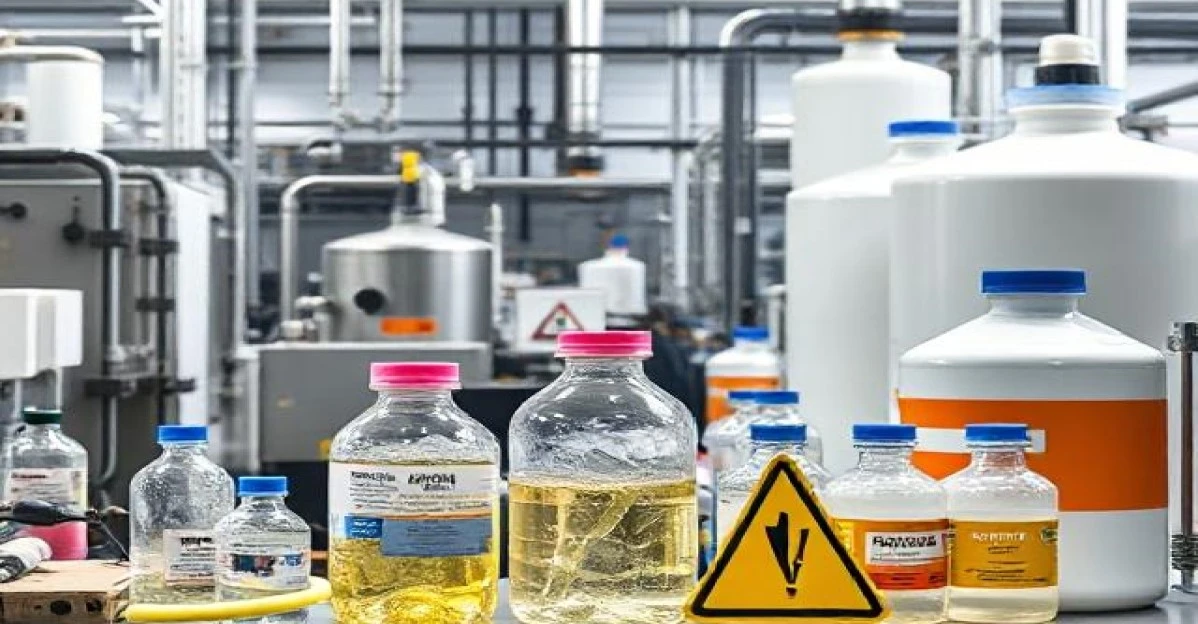
The uses of phosphoric acid extend across a wide range of industries, including agriculture, food production, manufacturing, water treatment, and metal processing. As a versatile and chemically stable industrial chemical, phosphoric acid is widely used in fertilizers, food additives, surface treatment, cleaning products, and various manufacturing processes. Its efficiency and broad industrial applications make phosphoric acid an important chemical for modern industries.
From fertilizer manufacturing to rust removal and food grade applications, the demand for phosphoric acid applications continues to grow across global markets. This article explores the most important industrial uses of phosphoric acid, its benefits and the industries that rely on it every day.
What Is Phosphoric Acid?
Phosphoric acid (H₃PO₄) is a colorless, odorless mineral acid commonly used in industrial and commercial processes. It is typically produced from phosphate rock and is available in different grades, including technical grade and food grade. Due to its acidic properties and ability to react with metals and minerals, phosphoric acid in manufacturing serves a wide range of industrial purposes.
Why Is Phosphoric Acid Important in Industry?
Industries worldwide rely on phosphoric acid because of its versatility and effectiveness in a wide range of manufacturing processes. Its chemical stability, excellent pH control capabilities and compatibility with various industrial systems make it a preferred choice across multiple sectors. Whether used in fertilizer production, food processing, water treatment, or metal finishing, phosphoric acid applications help improve operational efficiency, product quality and process reliability. These advantages have made it one of the most important chemicals in modern industrial operations.
Fertilizer Manufacturing
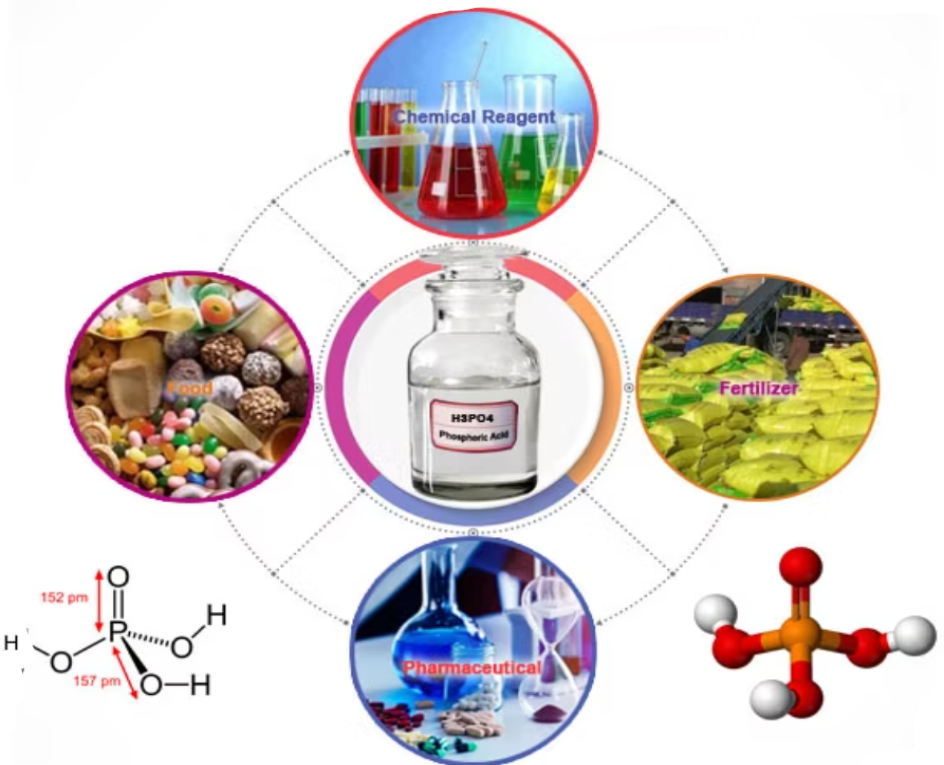
The largest and most important industrial use of phosphoric acid is fertilizer production. Agriculture depends on phosphorus as one of the primary nutrients required for healthy plant growth, root development and crop productivity. Manufacturers use phosphoric acid to produce phosphate based fertilizers such as Monoammonium Phosphate (MAP), Diammonium Phosphate (DAP) and Triple Super Phosphate (TSP). These fertilizers help crops absorb nutrients more efficiently while improving soil fertility and agricultural output.
As global food demand continues to rise, the importance of phosphoric acid in fertilizer manufacturing continues to grow. Agricultural sectors throughout the UAE, Saudi Arabia and other GCC countries rely heavily on phosphate fertilizers to improve crop production and maximize agricultural efficiency under challenging climatic conditions.
Metal Treatment and Rust Removal
Another significant phosphoric acid industry application is metal treatment and surface preparation. Industrial manufacturers use phosphoric acid to remove rust from steel and iron surfaces by converting iron oxide into a stable phosphate compound. This process not only eliminates corrosion but also prepares metal surfaces for painting, coating, welding, or further processing.
Industries such as automotive manufacturing, steel fabrication, construction, marine engineering and machinery production frequently utilize phosphoric acid for metal treatment because it improves paint adhesion, enhances corrosion resistance and extends the service life of valuable equipment and structures. Its effectiveness makes it a preferred solution in maintenance and manufacturing environments where long term durability is essential.
Food and Beverage Processing
Food grade phosphoric acid plays an important role in the food and beverage industry. It is commonly used as an acidity regulator that helps maintain consistent flavor profiles, improve product stability and enhance quality standards. In carbonated beverages, phosphoric acid provides the characteristic tangy taste while balancing sweetness and improving overall flavor consistency.
Beyond beverages, phosphoric acid in food processing is used in a variety of processed foods where acidity control is necessary to maintain texture, freshness and shelf life. Manufacturers value its reliability because it helps ensure product consistency while meeting food safety and quality requirements.
Water Treatment Industry
The use of phosphoric acid for water treatment is essential in both municipal and industrial water systems. Water treatment operators use phosphoric acid to regulate pH levels, control corrosion and improve treatment efficiency. Proper pH management helps protect infrastructure while maintaining consistent water quality for industrial and commercial applications.
In cooling towers, boiler systems and wastewater treatment facilities, phosphoric acid contributes to equipment protection and operational reliability. As industries increasingly focus on sustainable water management practices, phosphoric acid continues to play a valuable role in maintaining efficient water treatment operations.
Chemical Manufacturing
The chemical industry depends on phosphoric acid in chemical manufacturing as a key raw material for producing a wide range of industrial products. Its reactive properties make it suitable for manufacturing phosphate salts, specialty chemicals, detergents, industrial cleaners and various chemical intermediates used across multiple industries.
Because many downstream products require phosphate compounds during production, phosphoric acid serves as an essential building block within the global chemical supply chain. Its versatility allows manufacturers to create products that support agriculture, construction, water treatment, food processing and industrial maintenance sectors.
Pharmaceutical Industry
The pharmaceutical sector uses phosphoric acid in controlled manufacturing environments where purity and consistency are critical. It is commonly applied in pharmaceutical formulations, pH adjustment, active ingredient processing and laboratory operations.
High purity grades are essential to ensure product safety and regulatory compliance, making phosphoric acid an important component in modern pharmaceutical manufacturing.
Electronics Manufacturing
The electronics industry requires high purity chemicals capable of supporting precision manufacturing processes and phosphoric acid is one of the preferred solutions. It is commonly used in semiconductor production, circuit board manufacturing and surface cleaning applications where contamination control is critical.
The ability of phosphoric acid to remove impurities and prepare surfaces with exceptional precision makes it particularly valuable in advanced electronics manufacturing environments. As electronic devices become increasingly sophisticated, the demand for reliable chemicals such as phosphoric acid continues to grow.
Industrial Cleaning Applications
Industrial facilities frequently use phosphoric acid based cleaning solutions to remove mineral deposits, scale buildup, oxidation and rust from equipment surfaces. These cleaning applications help maintain operational efficiency while reducing the risk of equipment failure and production downtime.
Many industries rely on phosphoric acid cleaning solutions because they provide effective cleaning performance without causing excessive damage to treated surfaces. Regular maintenance using phosphoric acid can improve equipment longevity and support more efficient industrial operations.
Advantages of Using Phosphoric Acid in Industry
The widespread use of phosphoric acid applications across industries is driven by several important benefits:
- High chemical stability in industrial environments
- Effective pH control and adjustment
- Excellent rust removal and corrosion control properties
- Supports large scale fertilizer production
- Suitable for food grade and industrial applications
- Enhances metal surface preparation and coating adhesion
- Improves water treatment efficiency
- Cost effective for industrial processing operations
- Compatible with a wide range of manufacturing systems
- Helps improve equipment performance and longevity
These advantages make phosphoric acid one of the most valuable and versatile chemicals used in modern industrial operations.
Frequently Asked Questions
What is phosphoric acid mainly used for in industry?
The largest industrial use of phosphoric acid is fertilizer production, followed by metal treatment, food processing, water treatment and chemical manufacturing.
Why is phosphoric acid used in fertilizers?
Phosphoric acid provides phosphorus, a critical nutrient required for healthy plant growth and crop development.
Is phosphoric acid used in food manufacturing?
Yes. Food grade phosphoric acid is commonly used in beverages and processed foods for acidity control and flavor enhancement.
How does phosphoric acid remove rust?
It reacts with rust and converts iron oxide into a stable phosphate layer that can be removed or coated for protection.
Which industries consume the most phosphoric acid?
Major consumers include agriculture, food processing, water treatment, metal fabrication, pharmaceuticals and chemical manufacturing.
Conclusion
The wide range of industrial uses of phosphoric acid demonstrates its importance in modern manufacturing and production systems. From fertilizer production and metal treatment to food processing, water treatment and chemical manufacturing, phosphoric acid continues to support essential industrial operations worldwide. As industries focus on efficiency, product quality and operational reliability, the demand for phosphoric acid applications is expected to remain strong across global markets.