
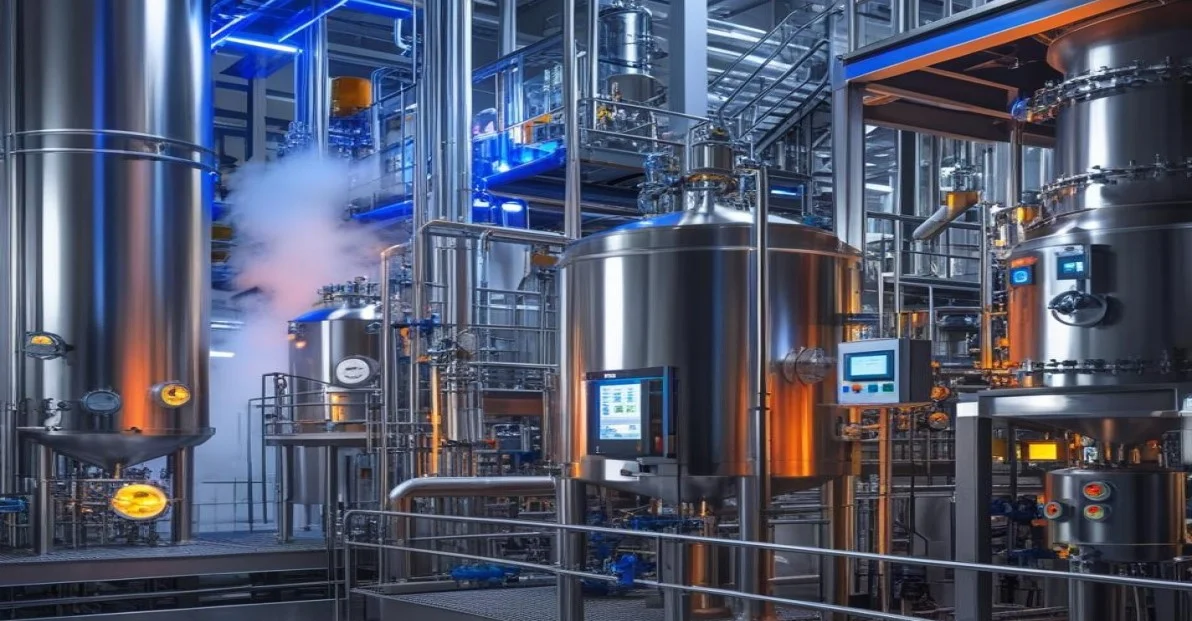
The global chemical industry represents one of the most sophisticated manufacturing sectors, where chemical manufacturers in UAE transform basic raw materials into thousands of essential products that power modern civilization. From petrochemicals to specialty compounds, these manufacturing processes require precision engineering, advanced technology, and stringent quality control to meet diverse industrial demands.
OozeChem stands as a leading chemical manufacturer company in the UAE, delivering high-quality industrial chemicals designed to optimize performance, reduce energy costs, and improve air and water quality. With innovative solutions contributing to sustainable operations, OozeChem helps businesses reduce carbon emissions by up to 30%, paving the way for a greener, healthier future.
The Foundation of Chemical Manufacturing
Chemical manufacturing companies in UAE operate sophisticated facilities that convert raw materials through controlled physical and chemical transformations. These processes involve precise manipulation of molecular structures to create products with specific properties and performance characteristics.
The manufacturing foundation relies on understanding reaction kinetics, thermodynamics, and mass transfer principles. Modern facilities integrate advanced process control systems that monitor critical parameters in real-time, ensuring consistent product quality while optimizing resource utilization.
Raw Material Processing and Preparation
The journey begins with comprehensive raw material evaluation and preparation. Construction chemicals manufacturers maintain extensive storage systems equipped with environmental controls to preserve material integrity. Each incoming batch undergoes rigorous testing to verify composition, purity, and compliance with specifications.
Automated material handling systems minimize contamination risks while ensuring proper mixing ratios for subsequent processing stages. Temperature-controlled storage prevents degradation of sensitive compounds, while specialized containment systems manage hazardous materials safely.
Core Manufacturing Processes
Chemical Reaction Engineering
The heart of chemical manufacturing lies in controlled chemical reactions within specialized reactor systems. Custom chemical manufacturing requires precise management of reaction conditions to achieve desired conversion rates and product selectivity.
| Process Parameter | Control Method | Quality Impact |
| Temperature Control | Automated heating/cooling | Reaction selectivity and yield |
| Pressure Management | Digital pressure controllers | Product purity and safety |
| Catalyst Addition | Precision dosing systems | Reaction efficiency |
| Mixing Intensity | Variable speed agitators | Product uniformity |
| Residence Time | Flow control systems | Conversion completeness |
Advanced reactor designs incorporate heat exchange systems that maintain optimal temperature profiles throughout the reaction zone. Catalyst management systems ensure consistent activity while minimizing deactivation through poisoning or fouling.
Separation and Purification Technologies
Following chemical reactions, products undergo sophisticated separation processes to achieve required purity levels. Chemical blending process technologies employ multiple separation techniques including distillation, extraction, crystallization, and membrane filtration.
Distillation columns utilize precise temperature and pressure control to separate components based on volatility differences. Multi-stage extraction systems employ selective solvents to isolate specific compounds from complex mixtures.
Crystallization processes control crystal morphology and size distribution, critical factors for product performance in applications such as pharmaceutical formulations and specialty materials.

Quality Assurance and Testing
Comprehensive quality control systems ensure products meet stringent specifications before release. Analytical laboratories employ advanced instrumentation including spectroscopy, chromatography, and physical property measurements to verify product characteristics.
Statistical process control methods monitor production consistency, identifying trends that could indicate process deviations. Automated sampling systems collect representative samples across production batches, ensuring accurate quality assessment.
Specialized Manufacturing Applications
Water Treatment Chemical Production
Water treatment chemicals manufacturers employ specialized processes designed for high-purity products that meet strict performance requirements. Water treatment applications demand chemicals with minimal contaminants that could interfere with treatment effectiveness.
Production facilities maintain cleanroom environments during critical manufacturing stages. Multi-stage purification processes remove trace impurities, while specialized packaging systems prevent contamination during storage and transportation.
Construction Chemical Manufacturing
Construction chemical production involves complex formulations engineered for specific performance characteristics. These products require precise control of setting times, strength development, and long-term durability properties.
Manufacturing processes incorporate extensive testing protocols that simulate real-world application conditions. Accelerated aging tests evaluate long-term stability, while performance testing validates effectiveness under various environmental conditions.

Advanced Manufacturing Technologies
Continuous Process Integration
Modern chemical manufacturing companies in Dubai increasingly adopt continuous processing technologies that offer superior efficiency compared to traditional batch operations. Continuous systems provide enhanced heat and mass transfer, reduced variability, and lower operating costs.
These integrated systems combine multiple unit operations into streamlined production lines with minimal manual intervention. Advanced process control algorithms maintain optimal operating conditions while providing real-time optimization capabilities.
Digital Manufacturing and Industry 4.0
Smart manufacturing technologies revolutionize chemical production through comprehensive digitalization. Internet of Things (IoT) sensors provide continuous monitoring of critical parameters, while artificial intelligence algorithms optimize process conditions based on historical performance data.
Digital twin technologies enable virtual process optimization and scenario testing without disrupting actual production. Predictive maintenance systems minimize unplanned downtime by identifying equipment issues before failures occur.
Green Chemistry and Sustainability
Environmental stewardship drives innovation in chemical manufacturing processes. Chemical process optimization focuses on waste minimization, energy efficiency, and renewable feedstock utilization.
Molecular sieve technologies and activated carbon applications represent growing areas of innovation in separation and purification processes. These technologies reduce environmental impact while improving process efficiency.
Check our Eco- Friendly Chemicals in UAE

Quality Management and Regulatory Compliance
Comprehensive quality management systems ensure compliance with international standards including ISO 9001, ISO 14001, and industry-specific regulations. Documentation systems maintain complete traceability from raw materials through final product delivery.
Regular audits by third-party organizations verify compliance with safety, environmental, and quality standards. Continuous improvement programs identify opportunities for process optimization and waste reduction.
Safety and Risk Management
Chemical manufacturing operations safety through comprehensive hazard identification, risk assessment, and emergency response planning. Process safety management systems evaluate potential risks and implement appropriate safeguards.
Worker safety programs include extensive training, personal protective equipment requirements, and regular safety audits. Emergency response plans address potential incidents while protecting workers and surrounding communities.
Future Trends and Innovation
The chemical manufacturing industry continues evolving toward more sustainable and efficient processes. Biotechnology integration offers new pathways for chemical production using biological catalysts and renewable resources.
Artificial intelligence and machine learning enable predictive process control that optimizes multiple objectives simultaneously. Advanced materials science drives development of new products with enhanced performance characteristics.
Oil and gas processing integration creates opportunities for feedstock optimization and waste stream utilization. Circular economy principles guide development of closed-loop manufacturing systems that minimize environmental impact.
Chemical manufacturers worldwide, including leading companies like OozeChem, continue advancing manufacturing technologies to meet evolving market demands while maintaining the highest standards of quality, safety, and environmental responsibility. These innovations ensure the chemical industry remains a cornerstone of modern industrial society.